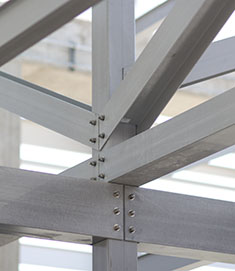
CCS Proprietary Cooling Tower Structure
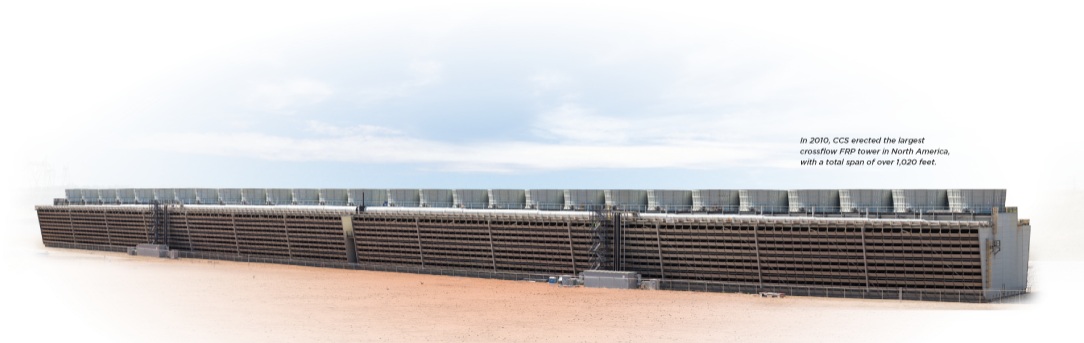
The Phoenix Counterflow and Pegasus Crossflow cooling tower structures utilizes proprietary FRP members designed for cooling tower use. US Patent No. 7,275,794.
FRP Structure with Patented Connections
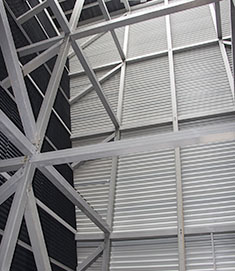
Shown here is the interior of a Phoenix counterflow cell at basin level. The corrugated FRP partition wall separates the two cell sections, Fill is bottom-supported by polyurethane resin lintels, a fill support system rated for both PVC and tile fill. The beam and column connection shown top center illustrates CCS' patented structural connection system utilizing minimal hardware. The endwall shown at right is CCS' double-wall panel.
CCS Patented Structure Connections and Fill Support
Wide column spacing creates open basin floors that are easier to clean and maintain.
Engineered Exclusively for Cooling Tower Use
Not only are Phoenix components designed exclusively for cooling tower use, they are engineered for specific functions within the cooling tower structure. Each component is designed to interface with other components.
- No piers required
- Column spacing up to 15 feet
- Flame spread rating of 15 or less
- Wind load designed up to 150 mph
- Structural members exceed OSHA 5000 pound anchor point requirement
- Meets international building codes
- Meets California and Florida building codes
- Meets hospital building codes
Totally Non-Corrosive Structure
Custom pultruded fiberglass members are Class I fire retardant and self-extinguishing.
Wide Column Spacing
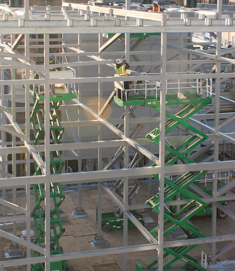
Allows for use of lifts for safe and fast installation. Also allows easier basin cleaning and maintenance and inspection of tower components.
Minimal Structural Air Restrictions
CCS's structural components are designed specifically for cooling tower application.
Ease of Basin Cleaning
Wide column spacing creates open basin floors that are easier to clean and maintain.
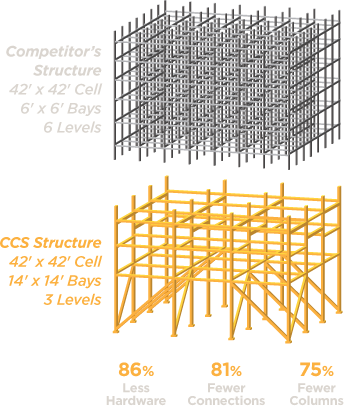
Fewest Structural Connections in the Industry
- Reduces assembly time
- Simplifies construction
Reduced Installation Time Means Lower Costs
Reduced erection hours and less time on site, resulting in lower costs.